Why your old phone battery is secretly treasure
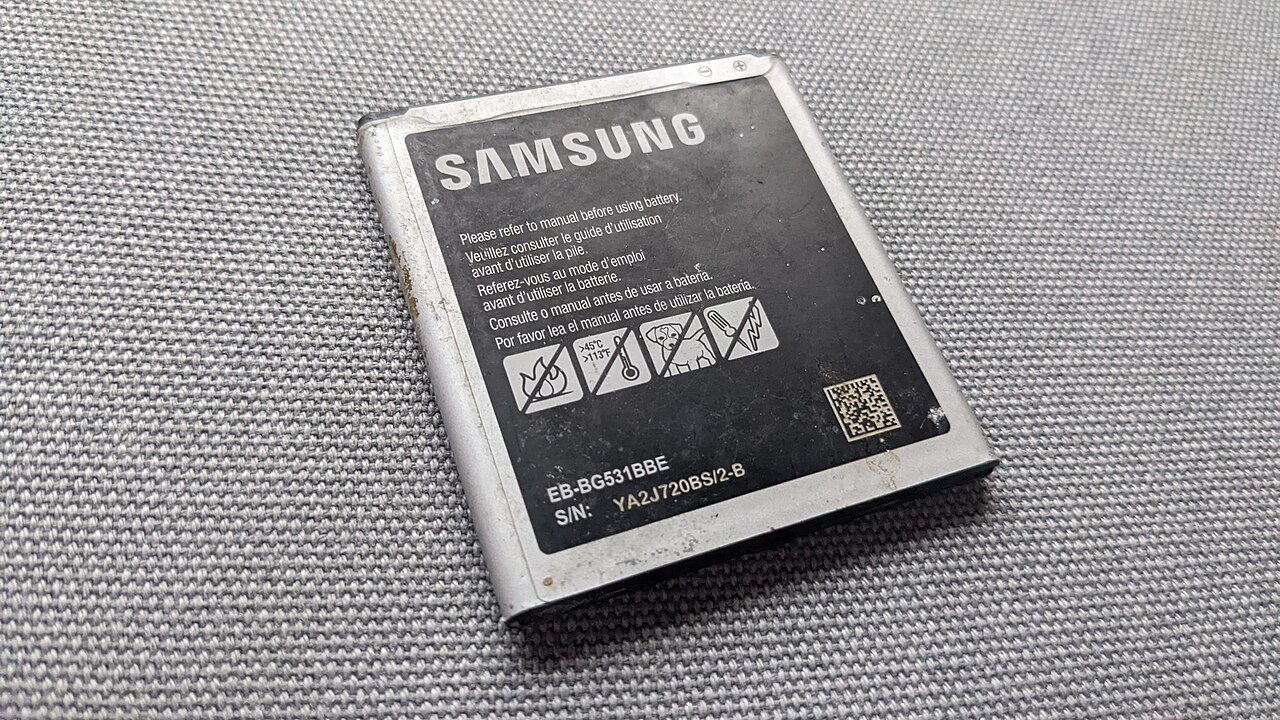
Somewhere in your home there is probably a drawer of forgotten things: a remote with no TV, a charger for a phone you sold years ago, and maybe an old phone that refuses to switch on. That phone looks like junk. But tucked inside it is a small, flat battery carrying metals that countries are now competing to hold on to.
On 10 November 2026, India made that very clear. The government banned the export of something called "black mass", a dark powder made from crushed old batteries. To see why a powder deserves a government order, let's open the battery up, gently, in our imagination only.
What's inside the battery
Your phone runs on a lithium-ion battery. Think of it as a tiffin box with two compartments and a thin wall between them. One side, the anode, is usually made of graphite, the same family of material as pencil "lead". The other side, the cathode, is a metal oxide. In most phones and handheld gadgets, that is lithium cobalt oxide.
Between the two sides sits the separator, a thin sheet that stops them from touching and short-circuiting. Everything is soaked in an electrolyte, a lithium salt dissolved in a liquid, which lets tiny charged lithium particles called ions swim across. The two sides are coated on very thin foils: copper on the anode side and aluminium on the cathode side.
When you use your phone, lithium ions travel from the anode to the cathode, and electrons flow through the phone's circuits to power it. When you charge it, the charger pushes them back. Back and forth, back and forth, every single day.
So what is black mass?
When a battery's life is over, recyclers first discharge it so it is safe to handle. Then the cells are crushed, sorted and sieved. Plastic casings and metal foils are picked out, and what remains is a black, sooty powder. That is black mass.
It may look like the dust at the bottom of a coal sack, but it is more like the masala at the bottom of a jar, where all the flavour is. According to ThePrint, black mass contains lithium, cobalt, nickel, manganese and graphite. These are exactly the ingredients battery makers need to build new batteries.
Getting the metals back out
There are two main ways to pull metals out of black mass. The first is a bit like cooking rice in a pressure cooker, but much hotter. In smelting, the material is heated above roughly 1,000 degrees Celsius and melts into a metal mixture containing cobalt, nickel, iron and copper. The catch is that ordinary smelting does not recover lithium or manganese; they end up in the leftover slag.
The second way uses chemistry instead of fire. Recyclers dissolve the black mass in acids such as sulphuric acid, often with hydrogen peroxide added. Then, step by step, they make each metal drop out of the liquid as a salt, a little like how sugar crystals form at the bottom of a cooling glass of sugar syrup. This method uses less energy, but it needs careful handling of strong acids.
Scientists are also working on "direct recycling", which tries to repair the cathode material and reuse it as it is, without breaking it down into separate metals. This is still at the research stage and not yet used commercially. Depending on the method, today's processes recover anywhere from about 25% to 96% of a battery cell's materials.
Why India said: keep it here
Until now, black mass could leave India freely. DGFT notification 49/2026-27, issued by the Directorate General of Foreign Trade on 10 November 2026, changed the export policy for this category of battery waste from "Free" to "Prohibited", with immediate effect and until further orders. It covers unsorted waste from spent batteries that do not contain lead, cadmium or mercury, which includes lithium-ion black mass.
Why? The government wants to strengthen battery recycling at home and secure supplies of these critical minerals. In October, it had said India's capacity to process black mass was limited, and some material was being exported before its valuable metals could be recovered here. It is a bit like a mango grower selling raw mangoes cheaply abroad and then buying the aamras back at a high price.
To build up that home capacity, the government launched a ₹1,500-crore incentive scheme for critical mineral recycling in September. Note that ThePrint points out this is not a ban on every battery-related export, only on this specific category of waste.
So what?
Recycling is not always the cheaper option. One 2017 estimate put the cost of getting lithium from old batteries at about five times that of mined lithium. But mines are far away and supplies can be uncertain, while old phones, laptops and scooter batteries are piling up in our own cities. Keeping black mass in India gives local recyclers more material to work with.
For you, the lesson is simple. That old phone is not just clutter. Hand it to a proper e-waste collector instead of the dustbin, and never break open a battery yourself, because damaged lithium batteries can catch fire. Your drawer might be a tiny mine.
- Notification number, date, HS code 85491400, Free to Prohibited, scope, reasons, ₹1,500-crore scheme: World Trade Scanner (DGFT notification text)
- Black mass contents; not a blanket ban on battery exports: ThePrint
- Black mass from shredding; October statement on limited capacity: Free Press Journal
- Battery structure, phone cathode (lithium cobalt oxide), rocking-chair nickname: Wikipedia: Lithium-ion battery
- Discharge, crushing, smelting, acid leaching, direct recycling, 25–96% recovery, cost estimate: Wikipedia: Battery recycling
Spotted a mistake or have an idea for a read? Write to [email protected].
